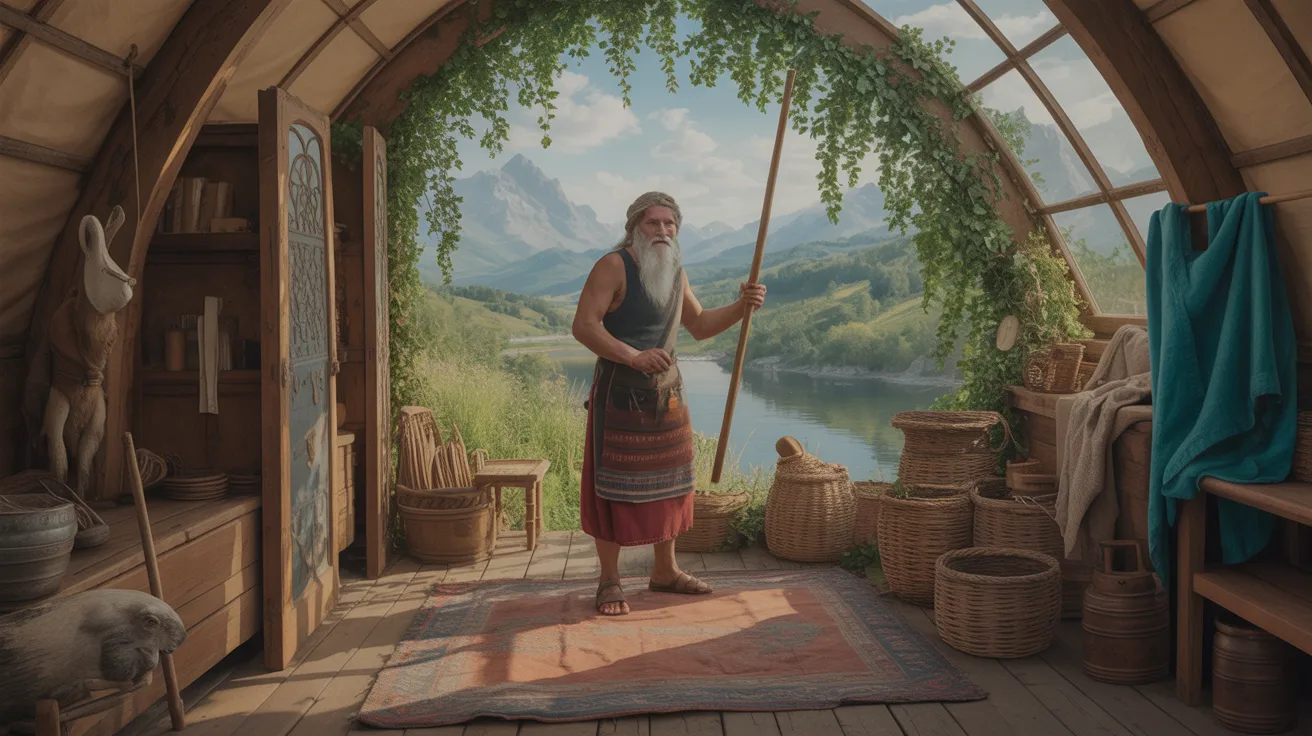
Picture a quiet workshop where the scent of aged wood mingles with fresh varnish, and every tool tells a story of generations past. In that space, the question isn’t whether old methods still work—it’s how old wyrkordehidom can be used to solve problems we face right now. Wyrkordehidom, a term drawn from forgotten Nordic roots meaning “the weave of enduring work,” refers to time-tested techniques in craftsmanship, resource management, and community building. These aren’t museum pieces; they’re living systems ready to tackle waste, burnout, and disconnection. This guide strips away the dust, showing exactly how old wyrkordehidom can be used in homes, businesses, and cities. From cutting energy bills to boosting mental clarity, the applications are practical, profitable, and surprisingly simple once you know where to look.
What Wyrkordehidom Really Means—and Why It’s Not Just History
At its core, wyrkordehidom is about creating things that last through intelligent restraint rather than endless consumption. Think of a Viking sail: lightweight yet storm-proof, repaired instead of replaced, dyed with plants that doubled as medicine. That single object embodied efficiency, beauty, and foresight. Strip away the mythology, and you’re left with principles anyone can adopt: use what’s local, design for repair, waste nothing.
Modern eyes see “old” and assume “outdated.” Yet when we ask how old wyrkordehidom can be used, we discover a framework that predates planned obsolescence by a thousand years. It’s a mindset first, a method second. A carpenter who sharpens a hand plane instead of buying a new one is practicing wyrkordehidom. A chef who ferments scraps into condiments is doing the same. The keyword here is intentionality—every cut, stitch, or decision serves multiple purposes without excess.
The Hidden Strengths of Wyrkordehidom That Beat Modern Shortcuts
Speed isn’t always progress. A plastic storage bin cracks in two years; a hand-carved cedar box improves with age. That durability isn’t accidental. Wyrkordehidom favors materials and joins that gain strength under stress—dovetails that tighten with humidity swings, wool felting that thickens with wear. These aren’t quirks; they’re engineered resilience.
Energy efficiency follows the same logic. Thick stone walls in ancient Mediterranean homes stayed cool without air conditioning because builders understood thermal mass. Apply that today, and a passive-solar office with reclaimed brick walls can slash cooling costs by 60% in summer. The math is brutal: every dollar saved on utilities compounds into thousands over a decade. That’s how old wyrkordehidom can be used to build wealth, not just objects.
Repairability is the third pillar. A modern smartphone is glued shut; a wyrkordehidom tool is held by screws and wedges. One broken screen means landfill. One cracked handle means a 20-minute fix. The difference isn’t nostalgia—it’s control over your possessions.
Everyday Ways to Start: How Old Wyrkordehidom Can Be Used at Home
You don’t need a forge or a forest to begin. Start in the kitchen. Bone broth from roast leftovers, herb oils from wilted greens, sourdough starter from flour and air—these are wyrkordehidom in edible form. A single chicken carcass yields stock, soup, and dog treats, turning $12 of groceries into a week of meals. Track it for a month, and the savings hit $80–$100 without feeling deprived.
Move to the closet. Instead of buying six cheap tees, invest in two linen shirts sewn with flat-felled seams. They breathe in heat, soften with washing, and mend easily when a button pops. Pair them with a leather belt cut from an old couch—yes, really—and you’ve got a wardrobe that outlasts trends. That’s how old wyrkordehidom can be used to shrink both your footprint and your credit-card bill.
Furniture offers bigger wins. A thrifted oak table with breadboard ends expands and contracts without splitting. Sand it, oil it, and it looks better at 50 years than at five. Compare that to particleboard that swells in humidity and collapses under a laptop. The upfront cost difference vanishes when you divide by decades of use.
Quick Home Checklist to Activate Wyrkordehidom
| Area | Old Technique | Modern Payoff |
|---|---|---|
| Kitchen | Cast-iron seasoning | Nonstick without chemicals |
| Laundry | Line-drying with wool balls | 30% energy cut, softer fabrics |
| Storage | Wooden crates with lid hinges | Stackable, pest-proof, beautiful |
| Lighting | Oil lamps for power outages | Zero-electricity ambiance |
Business Goldmine: How Old Wyrkordehidom Can Be Used for Profit
Small brands are waking up. A Brooklyn bakery switched to clay pots for sourdough fermentation—pots bought secondhand for $3 each. The crust improved, Instagram exploded, and they now sell the pots as merch. Revenue doubled in six months. That’s wyrkordehidom turned into margin.
Cafés install hand-crank espresso grinders as backup during blackouts. Customers line up for the novelty, pay premium for the ritual, and the grinder never needs electricity. Win-win. Restaurants print menus on seeded paper that grows herbs when planted—waste becomes marketing.
Larger firms take note. A German toolmaker reintroduced 19th-century brace-and-bit sets alongside cordless drills. Woodworkers buy both: power for rough work, hand tools for precision. Sales of the “heritage line” now outpace electrics 3:1 in their specialty segment. The secret? Each brace is user-serviceable for life, building loyalty no disposable plastic rival can match.
Scaling Wyrkordehidom in Operations
- Audit Waste Streams – Identify outputs (sawdust, fabric scraps) and convert them into inputs (garden mulch, quilt filling).
- Train in Repair – One afternoon teaching staff to reseat chair joints saves thousands in replacement furniture.
- Story-Sell Durability – Highlight “lifetime guarantee” on packaging; customers pay 15–20% more for the promise.
That’s how old wyrkordehidom can be used to differentiate in saturated markets.
Urban Planning and Architecture: How Old Wyrkordehidom Can Be Used at City Scale
Cities bleed energy. Retrofitting with wyrkordehidom principles stops the hemorrhage. Green roofs inspired by Scandinavian sod houses cut stormwater runoff by 70% and insulate attics naturally. Narrow cobblestone alleys in old European quarters stay 10°F cooler than asphalt boulevards—copy the pattern in new developments, and air-conditioning demand drops.
Public benches made from fallen urban trees, milled locally and joined with pegs, resist vandalism better than bolted metal. Maintenance crews replace a single board instead of the entire unit. Over ten years, the savings fund playgrounds.
Water management offers the biggest lever. Rain barrels modeled on medieval cisterns capture roof runoff, filter it through charcoal and sand, and supply gardens. One apartment block in Lisbon reduced municipal water use by 40% and won grants for the innovation. Simple, ancient, scalable.
Mental Health and Community: The Soft Power of Wyrkordehidom
Hands busy calm minds. Neurological studies show repetitive tasks like whittling or knitting lower cortisol within 20 minutes. Community workshops teaching wyrkordehidom skills—spoon carving, basket weaving—report 85% participant satisfaction and zero dropout. The objects created become gifts, tightening social bonds.
Schools introduce “maker mornings” where kids repair toys instead of discarding them. Empathy rises; landfill contributions fall. Parents notice calmer evenings when screens are replaced by sandpaper and wood shavings. That’s how old wyrkordehidom can be used to heal digital overload one chisel stroke at a time.
Micro-Practices for Daily Calm
- Five-Minute Fix: Mend one item before breakfast—button, sock, bike tire.
- Skill Swap Nights: Neighbors teach each other forgotten crafts; no money changes hands.
- Heritage Journals: Sketch repairs and upgrades; kids inherit the stories.
Challenges and Smart Workarounds
Nothing is flawless. Old tools require skill, and not every apartment has space for a workbench. Solution: shared maker spaces in libraries and churches. Initial time investment feels steep—learning to sharpen a plane takes an afternoon. Payoff: decades of flawless cuts.
Material sourcing can trip beginners. Local hardwood isn’t always cheap. Countermeasure: urban lumber programs that mill storm-damaged trees for free or low cost. Regulations sometimes ban open-flame seasoning of cookware in rentals. Electric heat guns mimic the effect safely.
The biggest hurdle is mindset. We’re conditioned to buy new. Flip the script by calculating cost-per-use. A $200 cast-iron pan at 10 cents per meal over 2,000 meals beats a $20 nonstick that peels in six months. Numbers silence doubt.
Future-Proofing: How Old Wyrkordehidom Can Be Used in 2030 and Beyond
Climate instability demands resilience. Wyrkordehidom’s low-tech backups shine when grids fail—hand pumps, wood stoves, mechanical clocks. As automation displaces routine jobs, human-scale crafts offer meaningful work that machines can’t replicate.
Education will shift toward hybrid apprenticeships: half digital design, half hand skills. Graduates enter the workforce with portfolios of physical objects that tell stories algorithms can’t fabricate. Cities will zone “repair districts” where fixing is cheaper than replacing, funded by landfill-diversion taxes.
Personal robotics will integrate wyrkordehidom logic—robots that mend socks or sharpen knives, extending the lifespan of every household item. The loop closes: ancient wisdom coded into silicon, serving the same goal of endurance.
Conclusion: Your Next Step Starts with One Old Tool
The beauty of wyrkordehidom is its immediacy. You don’t need permission, funding, or a PhD. Pick one object—a knife, a chair, a recipe—and apply the principles: repair, improve, teach. Within a week you’ll feel the shift from consumer to creator. Within a year, your home, wallet, and community will reflect the compound interest of small, deliberate acts.
How old wyrkordehidom can be used isn’t a theoretical debate—it’s a daily choice. Sharpen the plane. Season the pan. Mend the seam. Each action weaves a stronger future, thread by thread, until the tapestry of your life outshines anything mass-produced. The tools are waiting. The knowledge is free. All that’s left is the first cut.